How to Create a Home That Works for Your Family
Keep reading this post to learn:
The 5 pillars that make up a peaceful home
How these 5 pillars can help you create a home that feels less chaotic and more intentional
Today's post is one that I have been really excited about because we are talking about something that I think so many of us want, but we don't necessarily know how to create it. And that is…a peaceful home life.
Now, before you start thinking I'm about to tell you how to have a spotless house where everyone wakes up at 6 a.m., drinks lemon water, does their morning routine without complaining, and then peacefully eats a homemade breakfast together…no. Absolutely not. That is not what we're doing here.
My home is not peaceful 100% of the time. I have a three-year-old. Need I say more? There are days when I’m surrounded by mounds of toddler toys, tripping and cursing the little LEGO piece I just stepped on, lol
I recently had a mini crash out cleaning out my closet because I was so overstimulated by how stuffed it was.
You know…normal life stuff. So when I say "peaceful home," I am NOT talking about a perfect home. I am talking about a home that works for the people who live there. A home where there is some intentionality behind how you spend your time, communicate, contribute, connect, and move through everyday life.
A peaceful home is built on a few essential pillars…think of these as the foundation of your family’s culture. Every family will express these differently…and that’s good! We're not trying to copy someone else's home, but create one that reflects our values, our season of life, and our family.
Here are the 5 pillars of a peaceful home:
01 • IDENTITY – Who are we?
02 • RHYTHMS – How do our days flow?
03 • RESPONSIBILITY – How do we care for this home together?
04 • CONNECTION – How do we stay close?
05 • PROTECTION – How do we preserve what matters most?
Let’s chat a little bit about each of these pillars! This is a little sneak peek moment because this is the framework we’re going to be working through in depth throughout the fall semester inside Hustle Sanely Study Hall!
And before I explain more about each of these pillars, I want you to hear these less as five things you need to add to your already-full plate and more as five areas of your family life that are probably already happening in some capacity but maybe not as intentionally as you’d like.
01 • IDENTITY — Who are we?
The first pillar is Identity, because before we can figure out how our home is going to run, we have to figure out what we're actually trying to build. Every family has a culture, whether you've intentionally created one or not. The way you communicate, the way you handle conflict, what you prioritize, how you celebrate, how you rest, how you welcome people into your home—all of those little things are creating your family's culture.
So this pillar is really about asking: Who are we as a family? What matters to us? What do we want our home to feel like? What are our values? What are the expectations in our home? What do we want our kids to remember about the atmosphere of their childhood?
Because here's the thing: your systems should support your values, not the other way around. If you say you value connection but your calendar leaves no room for connection, that's something worth looking at.If you value rest but everyone's scheduled every night of the week, maybe your rhythms aren't actually supporting your identity. So we start here…with defining what matters.
02 • RHYTHMS — How do our days flow?
Once we know what matters to us, the next question is: What does that actually look like in everyday life? That's where rhythms come in.
And I love this pillar because I am not talking about creating some rigid family schedule where every minute of your day is planned out. We're talking about creating simple anchors that make life feel a little more predictable and a little less chaotic.
Things like morning rhythms, evening rhythms, meal rhythms, a weekly reset, rhythms of rest, and even seasonal rhythms.
Because peace doesn't necessarily come from having more time. Sometimes it comes from having fewer decisions to make and less friction to navigate. When your family knows, “This is how we usually do mornings,” or “This is when we reset the house,” or “This is how we typically handle dinner,” you're not reinventing your life every single day.
The goal isn't to create a routine you fail at every time real life happens. The goal is to create a structure you can return to when life gets chaotic.
03 • RESPONSIBILITY — How do we care for this home together?
This one is BIG because a peaceful home cannot be built by one exhausted person doing everything. This is our home, and we all contribute to it is the mindset we’re working toward here.
And that doesn't necessarily mean everybody does the exact same amount of work. Every person in a family has different ages, capacities, schedules, strengths, and responsibilities.
But we want to move toward shared ownership of the home. And that means looking beyond the visible chores. Because there's so much invisible work that goes into running a home—remembering appointments, noticing we're out of toothpaste, planning meals, keeping track of school events, buying birthday gifts, knowing what needs to happen next.
So this pillar is about asking: What does it look like for our family to actually care for this home together?
How can we create age-appropriate responsibilities? How can we make the mental load more visible? What can we delegate – not just as a task, but as actual ownership? Because shared responsibility doesn't just create a cleaner house. It creates a family where everyone understands, “I belong here, and I have a part to play.”
04 • CONNECTION — How do we stay close?
And then we have Connection because at the end of the day, what is the point of creating a peaceful home if the people inside of it don't actually feel connected to one another?
And I think sometimes we overcomplicate this. We think connection means family vacations or elaborate traditions or planning some Pinterest-worthy family activity every weekend. But so much of connection happens in really ordinary moments.
It's sitting around the dinner table. It's reading together before bed. It's making pancakes on Saturday morning. It's a conversation in the car. It's a family joke that nobody else understands. It's a bedtime hug.
It's those tiny, repeatable moments that communicate, “You are seen. You are known. You belong here.” So we're going to talk about things like daily connection rituals, weekly traditions, holiday traditions, birthdays, hospitality, and one-on-one time.
But the goal isn't to give your family a giant checklist of things you now have to do. It's to help you identify a few meaningful ways your family can regularly connect and enjoy one another.
05 • PROTECTION — How do we preserve what matters most?
And last but not least, we have Protection. This one might be my favorite because once you've figured out what matters to your family, you have to decide what you're actually going to do to protect it because life is busy! There will always be another activity, another commitment, another invitation, another email, another thing that needs to get done.
And if we're not intentional, the things we say matter most to us can slowly get crowded out by everything else. So protection is about creating boundaries around the things you don't want the busyness of life to steal.
Maybe that's protecting family dinners. Maybe it's protecting your weekends. Maybe it's protecting rest. Maybe it's protecting one-on-one time with your kids or your spouse. Maybe it's protecting the atmosphere you want in your home by getting really intentional about technology, schedules, commitments, or even the way you communicate with one another.
It's essentially asking: “Now that we know what matters to us, how are we going to keep those things from getting squeezed out?”
And that's the beauty of these five pillars. They're not five separate projects. They're connected:
Identity determines what matters to your family.
Rhythms turn those values into the way your days actually flow.
Responsibility determines how everyone contributes.
Connection creates opportunities to enjoy and care for one another.
Protection creates boundaries around the things you don't want the busyness of life to steal.
Ultimately, we're not trying to create homes where everything runs perfectly; we're trying to create homes that work for the people who live there.
Homes that reflect who you are.
Homes where the work of running the house isn't falling on one person.
Homes where your kids know they belong.
Homes where there are little things everyone can count on.
Homes where the people inside the house actually enjoy being together.
And homes that protect the things your family has decided matter most.
But let me remind you of something: you don't have to create a completely different life to create a more peaceful home. You don't need a bigger house. You don't need more money. You can start with what you already have. Start noticing. Start asking better questions. Start deciding what matters. And then start making tiny changes that support those things.
Because I really believe peaceful homes aren't built in one giant overhaul. They're built in the little things we repeat.
The way we talk to each other. The way we spend our evenings. The way we handle hard moments. The traditions we repeat. The responsibilities we share. The boundaries we hold. The way we make room for connection. The little things that, in the moment, don't feel particularly significant…but eventually become the culture of your family. And that is such a beautiful thing to get to intentionally create.
📲 Did you find this helpful? Screenshot this post, share it to your IG stories, and tag @jessmmassey and @hustlesanely so we can cheer you on!
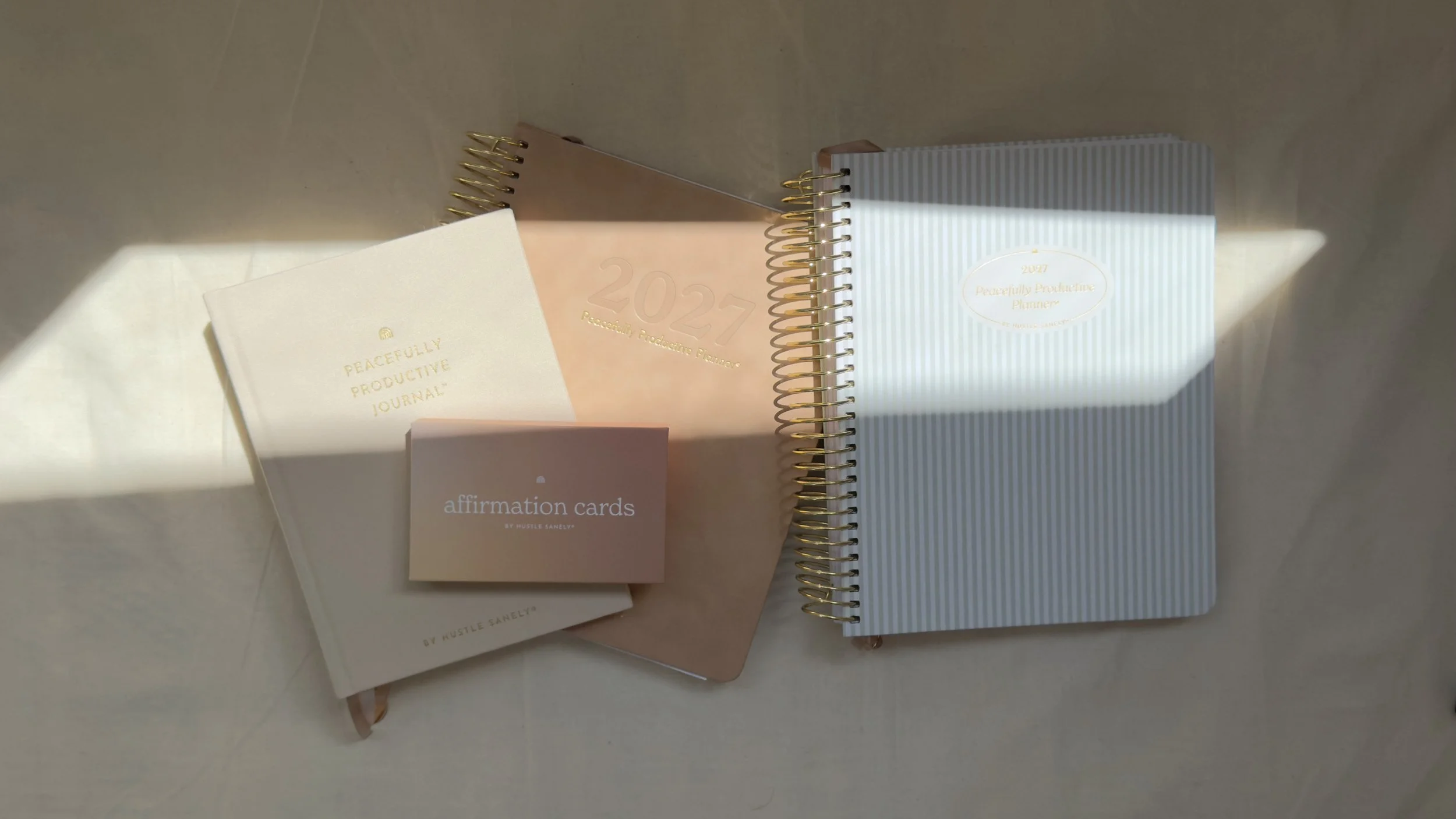
Our 2027 Paper Planner Collection is here!
Loved this blog post? Tune into the full podcast episode below!